Wednesday, March 23, 2011

Importance Of Foreign Banks In India

Foreign Banks that are actively working in India are mainly the banks of various countries and have their branches here. Today, approximately sixteen foreign banks in India are actively operation with 180 branches in different citie. In India, these foreign Banks are thriving successfully in their business, earning large amount of profits. A number of Indian Banks have their branches in foreign countries as well. The leaders among these are the Bank of Baroda and State Bank of India.

Standard chartered bank

Foreign Banks in India are accepted gladly by the customers due to the promptness of its services to their customers. With numerous ATMs for flexible money withdrawal, quickness in loan approval and telephone communications of loan proposal, 24 hours service centers has attracted many customers to bend towards these banks to get banking facilities from them. The service offered by the foreign banking in India has motivated the local banking sector in India to speed up and rectify their weakness that evaded people away from taking up their service. The banking sectors of India became accurate and tried to offer the services similar to those given by foreign banks to stay in business.

HSBC bank india

The foreign banks of India has lend active hands to help customers in expanding various business activities in a very customer friendly way. They efficient organizational structure and tools available are utilized to serve customers with a new level of satisfaction.

Citi Bank India

From time to time the Reserve Bank of India employs new rules for these foreign banks in India through the budget that helps them to grow without external influence. Foreign banks in India today are allowable to arrange for local subsidiaries. According to such policy by RBI, the Indian subsidiaries of these foreign banks will not be allowed to open branches liberally.

Here is a list of foreign banks in India

· ABN-AMRO Bank

· Taib Bank

· BNP Paribas Bank

· CITI Bank

· Standard Chartered Bank

· Abu Dhabi Commercial Bank

· Deutsche Bank

· Bank of Ceylon

· HSBC

· JPMorgan Chase Bank

· China Trust Commercial Bank

· Scotia Bank

Role Of Private Banks In India

Today, private banks are the most booming banking sector of India. Private Banks helped in defining banking in entirely distinctive way by providing better-quality services that attracted a astonishing number of clients. Private banks in India were the first ever banks that successfully showed rising profit graph in every financial year and created a landmark in a very limited time span in the Indian banking sector. The private banks worked following a well plotted plan that targeted to attract large number of clients with their service which was a very difficult and challenging task.

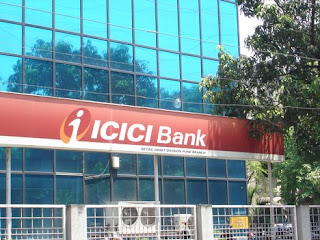
ICICI bank India
Private bank worked to rectify those weak points that was disliked in public sector bank and was successful to draw clientele by contributing to those facilities which the government banks never managed to offer such as flexible approval of loans.

Kotak mahindra bank india
Private Banks in India are gaining popularity each day by providing numerous lucrative services to their customers. They opened thousands of ATMs for easy withdrawal of money, managed to offer loan proposals using telephone communications and opened service centers that worked in 24X7 basis enabling maximum customers to avail services in need. These features with other facilities helped the private banks to head out a hard-hitting competition to those public sector banks that never provided such services before.

HDFC bank india
The Private Banks also called private sector banks in India worked hard to expand various business activities and served the public to manage their savings in a very efficient and customer friendly way. They have well knitted and refined organizational structure and are equipped with excellent monetary tools and talents and use the field of technological equipments to serve people with better service possible.
Here is a list of private banks in India
• ICICI Banks
• Kotak Mahindra Bank
• SBI Commercial
• HDFC Bank
• ING Vyasya Bank
• Karnataka Bank
• Bank of Punjab Ltd
• Development Credit Bank Ltd
• UTI Bank Ltd
• Yes Bank Ltd
• Jammu & Kashmir Bank


Private Banks of India are responsible for increased employment opportunity among the educated youth of India. They worked to increase investment as well as circulate money that enabled both the corporate as well as medium enterprises to meet the need of financial funds.

Nationalized Banks Role In India

Nationalized banks in India are owned by Indian government. They are also called public sector banks. It is the Indian government who is accountable for the deposited money in the accounts of nationalized banks. Banks were nationalized with various objectives in India after its independence. In the year 1991, just after Economic Reform the banking industry of India stepped into a fresh perspective of competitiveness, competence and output. The reforms made Indian banks more professional organizations and helped to get rid of those shocking days when banks were suddenly nationalized.


State bank of India(SBI)


Nationalized banks are also called the government banks in India and worked to providing social welfare to Indian public. They were responsible for directing funds to the needy and various sectors like agriculture and small industries for expansion as well as for economic development.

Banks were nationalized to cater to the fund requirements by priority sectors. These sectors are largely the agriculture sector which contributes largely to national income of the country.


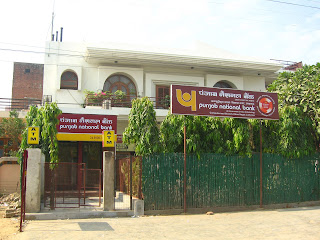
Punjab national bank


Nationalized Banks in India plays a great role in controlling private monopolies to guarantee an even contribution of credit to such sections of the society that are most desirable.

Nationalized Banks in India also help in dropping the regional disparity. India is divided into urban and rural sectors and it is the nationalized banks that work to provide all forms of banking facilities to the most rural areas of the country.

Bank Of Baroda

After independence, it is the Nationalized Banks that worked to spread banking facilities across the underdeveloped region of the country in those days as there were insufficient number of banks and people were deprived from banking facilities. The nationalization of banks helped in developing banking practice among the large population of the country since its independence.

Below is a list of nationalized banks in India

· State Bank of India

· Allahabad Bank

· Bank of India

· Bank of Maharashtra

· Bank of Baroda

· Central Bank of India

· Canara Bank

· Corporation Bank

· Punjab & Sind Bank

· Dena Bank

· Indian Overseas Bank

· Syndicate Bank

· United Bank of India

· Indian Bank

· Punjab National Bank

· Oriental Bank of Commerce

· Union Bank of India

· UCO Bank

· Vijaya Bank